

The best ecommerce platform for Canadian retail: Shopify, Webflow or custom?
For a Canadian retail business, the website is rarely just an online store.
It may need to share inventory with a physical shop, support pickup, ship across a large country, handle seasonal demand and give staff one place to manage products and orders. The brand still has to feel distinctive.
Shopify is the default answer for good reasons. Webflow can be the better brand platform in lighter ecommerce situations. Custom development belongs where the buying process is genuinely unusual.
Start with how the business sells
Before comparing platforms, write down every sales channel:
- Online orders
- A physical store
- Pop-ups or seasonal locations
- Wholesale accounts
- Phone or email orders
- Social and marketplace sales
- Local pickup or delivery
The best platform is usually the one that removes duplicate work across those channels.
When Shopify is the best fit
Shopify is built around products, inventory, checkout and orders. Its point-of-sale system can sync orders and inventory across retail locations and the online store, according to Shopify's current POS documentation.
It is a strong fit when:
- You carry more than a handful of products
- Inventory changes online and in store
- Staff need a familiar retail admin
- Shipping, discounts and returns are regular work
- You want a large app and integration ecosystem
- Ecommerce is a major part of revenue
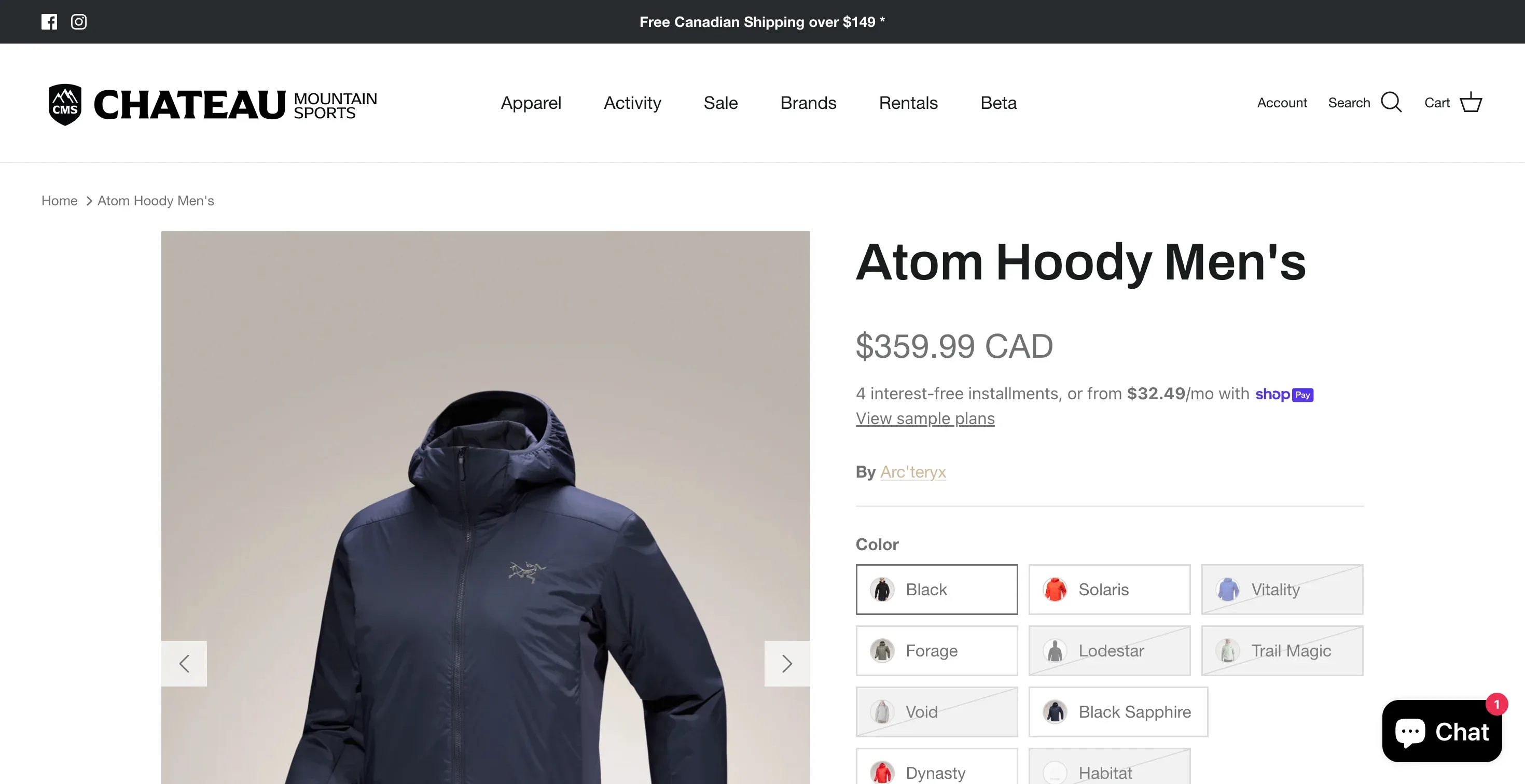
Château Mountain Sports uses a custom Shopify storefront to combine streamlined ecommerce with a premium alpine retail brand.
RopesEdge uses Shopify for a technical, multilingual catalogue serving customers around the world.
CLS Landscape Supply uses Shopify to make bulk product shopping feel clear and dependable.
The platform is the same. The structure and buying experience are not.
When Webflow can be enough
Webflow is a design and content platform first. Ecommerce is not its strongest reason to exist.
It can still work when:
- The brand story matters more than a large catalogue
- Products are few and simple
- Most purchases happen elsewhere
- The site drives visitors to a store, stockist or external checkout
- Marketing needs fast control over campaigns and content
Mountain Joe combines a bold Webflow brand site with retail-locator and ecommerce features. The website supports the brand without pretending to be a complex retail operating system.
When a hybrid is better
Sometimes Webflow should own the experience while Shopify owns commerce.
Banff Whisky uses Webflow with the Shopify API. The public site feels like the brand, while Shopify quietly handles the store.
A hybrid is worth considering when:
- The marketing experience needs unusual creative control
- Shopify still needs to own products and checkout
- Ecommerce is important but should not dictate every page
- The team accepts a more technical integration
The trade-off is maintenance. Two systems need clear ownership, and the connection must be tested whenever either platform changes.
When custom development makes sense
Custom code is justified when the store needs behaviour that standard commerce platforms cannot handle cleanly.
Examples include:
- Complex product configuration
- Live pricing from another system
- Customer-specific catalogues and approvals
- An unusual booking or rental model
- Deep ERP or warehouse integration
- A marketplace with several sellers
- A portal combining orders, projects and support
Do not choose custom code just to make the design look different. Shopify can support a highly custom storefront. Choose custom when the business logic is different.
Canadian questions to settle early
The platform decision should include:
- Where inventory is stored
- Which provinces and countries you ship to
- Pickup, delivery and return workflows
- How taxes are configured and reviewed
- Whether the site needs English and French
- Which currencies and payment methods matter
- Whether wholesale and retail share one catalogue
- What happens when a product sells in the physical shop
These questions affect the build more than a feature checklist copied from a platform homepage.
A quick decision test
Choose Shopify when commerce operations are central.
Choose Webflow when brand and content are central and selling is light.
Choose a hybrid when both deserve first-class treatment.
Choose custom development when the buying workflow itself is unique.
The right platform should reduce daily work for the team while making the buying experience clearer for customers. If you are planning a retail store, see my Shopify development work or start a project.