

Webflow or Shopify: which one fits your business?
"Should we build on Webflow or Shopify?" is one of the first questions I get from new clients. Both are great platforms. They're just great at different things, and picking the wrong one means fighting your website for years.
Here's how I think about it.
Start with what the website is for
Ask one question: is the main job of this website to sell products online, or to get people to visit, call, book or enquire?
- If it's mostly selling products, look at Shopify.
- If it's mostly telling your story and bringing people in, look at Webflow.
Most businesses know the answer straight away. The rest of this post is for the ones in between.
When Webflow is the better fit
Webflow is a design-first platform. It gives me full control over the look of the site, and gives you an editor where you change text and images right on the page.
It's a strong fit for:
- Restaurants, bars and hospitality, where the site is about menus, photos, events and bookings
- Real estate and development, with project pages and listings you manage yourself
- Service businesses, where the goal is a call, a quote request or a booking
Most of the restaurants in my portfolio are on Webflow for exactly this reason: they change menus and specials often, and they want the site to look like nobody else's.
When Shopify is the better fit
Shopify is built to run a store. Inventory, shipping, taxes, payments, discount codes, abandoned carts, point of sale in a physical shop: it handles all of it, and it handles it well.
It's the right call when:
- You have more than a handful of products
- You ship orders, or sell both in store and online
- You need things like variants, bulk pricing or wholesale
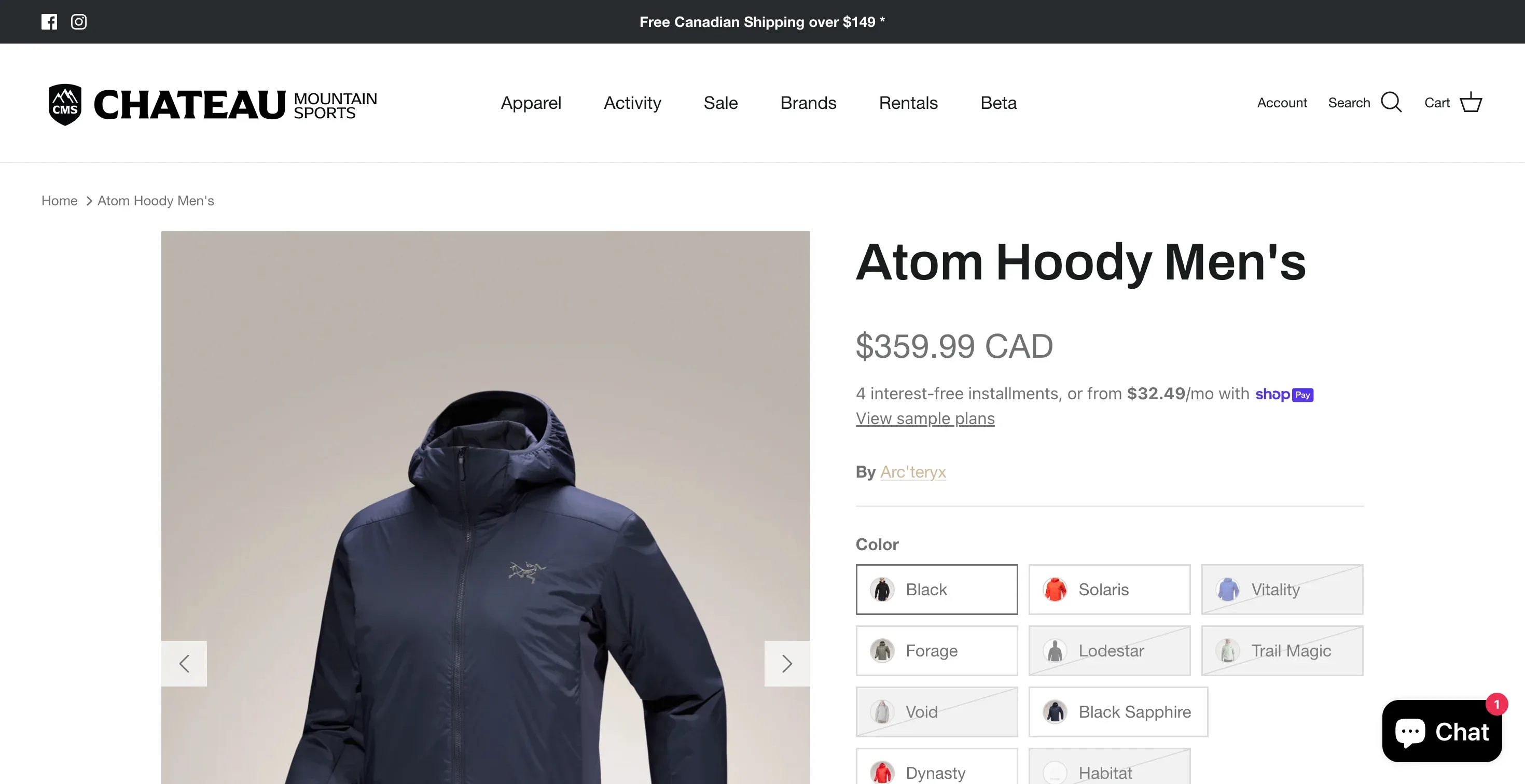
Château Mountain Sports, RopesEdge and CLS Landscape Supply all run custom Shopify stores, each designed around how their customers actually shop.
When you need both
Sometimes the brand experience matters as much as the checkout. In that case you can have both: a Webflow site for the story, connected to Shopify for products and payments.
That's how Banff Whisky works. The site feels like the brand, and Shopify quietly handles the store behind it.
Things people worry about that matter less
- "Which one is better for SEO?" Both are fine. Good content, fast pages and a sensible structure matter far more than the platform.
- "Can I switch later?" You can, but it's a rebuild. Better to choose well up front.
- "Will it look like a template?" Not if it's designed properly. Every site I build on either platform is custom.
Still not sure?
Tell me what you sell, how you sell it and who updates the site, and I'll give you a straight answer. Sometimes it's neither, and a custom build makes more sense. You can read more about how I work as a Webflow developer and a Shopify developer.